
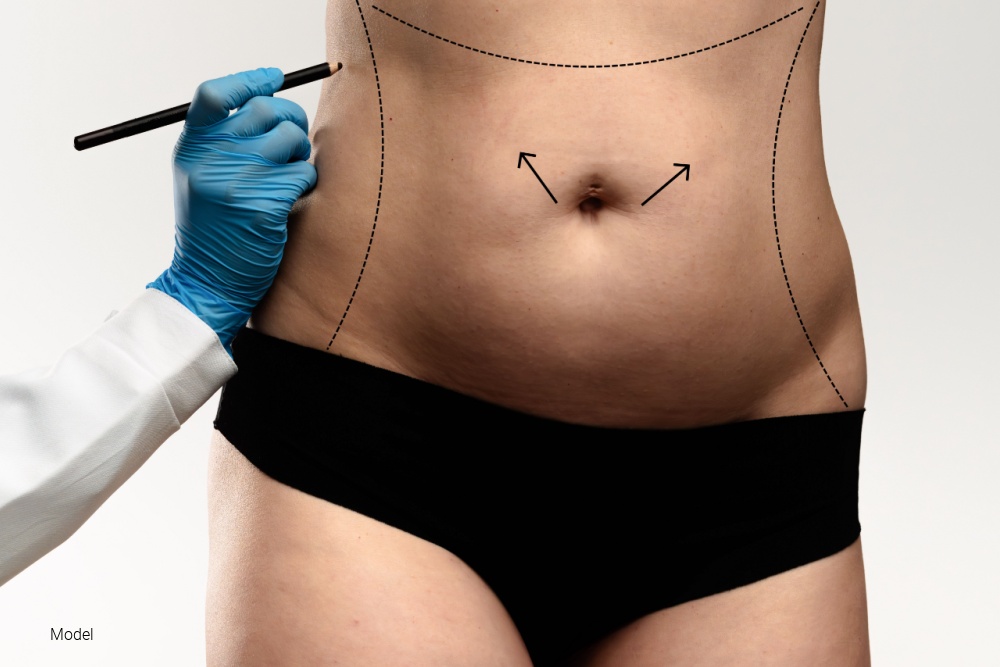
A tummy tuck, medically known as abdominoplasty, is one of the most effective procedures for improving abdominal contour after weight loss, pregnancy, or aging. However, not all tummy tucks are the same. Different surgical approaches are designed to address varying degrees of excess skin, fat, and muscle separation. This blog discusses the different tummy tuck techniques and a brief recovery overview for each option.
Introduction to Abdominoplasty
There are several different tummy tuck techniques available, including the mini tummy tuck, traditional tummy tuck, and extended tummy tuck. Each approach is tailored to address specific concerns, such as excess skin and fat in the lower abdomen, upper and lower abdomen, or even extending to the flanks and lower back. A board-certified plastic surgeon will carefully assess your unique anatomy, goals, and lifestyle to recommend the most appropriate tummy tuck procedure for your needs.
During a tummy tuck, the plastic surgeon makes an incision in the lower abdomen, typically just above the pubic hairline. Through this incision, the surgeon removes excess skin and fat, tightens the abdominal muscles, and, if necessary, repositions the navel to achieve a natural appearance. The remaining skin is pulled taut to create a smooth, toned look, and the incision is meticulously closed. In some cases, drainage tubes may be placed temporarily to help prevent fluid buildup and support the healing process.
By understanding the fundamentals of abdominoplasty, including the various surgical options, the general procedure, and the importance of proper preparation and aftercare, patients can make informed decisions about their cosmetic surgery. Consulting with a board-certified plastic surgeon ensures that you receive expert guidance and a personalized treatment plan tailored to your body and goals, setting the stage for a successful transformation and a more confident, toned appearance.
What Surgical Options Are Available for Tummy Tuck Surgery?
Tummy tuck surgery is not a one-size-fits-all procedure. Surgeons tailor the technique based on a patient’s anatomy, goals, and lifestyle. In general, abdominoplasty addresses three key concerns: loose or excess skin, including extra skin and sagging skin; stubborn fat deposits; and weakened or separated abdominal muscles (diastasis recti). Abdominoplasty also addresses weakened connective tissue and fatty tissue in the abdominal wall. The procedure removes excess fat and is designed to tighten muscles for a firmer, more toned abdominal profile.
Surgical options range from less invasive procedures for mild concerns to more extensive surgeries for patients who need significant correction. According to clinical studies published in plastic surgery literature, muscle tightening and skin excision can significantly improve core strength, posture, and overall quality of life in appropriately selected patients. Choosing the right approach is critical for achieving natural-looking, long-lasting results.
Candidates must be in good physical condition, have their medical histories thoroughly reviewed, and maintain a stable body weight before undergoing surgery.
Traditional Tummy Tuck vs Mini Tummy Tuck vs Extended Tummy Tuck
A traditional (full) tummy tuck is the most commonly performed tummy tuck abdominoplasty. It treats the entire abdominal area, from the rib cage down to the pubic region. This option typically includes muscle repair, removal of excess skin and fat, and repositioning of the belly button. It is ideal for patients with moderate to severe skin laxity and muscle separation, often following pregnancy or major weight loss.
A mini tummy tuck (also known as mini abdominoplasty) is a less extensive, minimally invasive procedure that focuses on the lower abdomen, below the belly button. It is designed for patients with a high torso and minimal excess skin, allowing for a minimal incision just above the pubis. The incision is small and strategically placed along the bikini line, and usually does not require repositioning of the navel. Muscle tightening may be limited or unnecessary. This option works best for patients with mild skin laxity and minimal muscle separation who are already close to their ideal weight.
An extended tummy tuck procedure goes beyond the scope of a traditional tummy tuck by addressing excess skin and fat that extend to the flanks (love handles) and lower back. The main difference between a traditional tummy tuck and an extended tummy tuck is that the extended version addresses the flanks in addition to the abdomen. This procedure involves a longer incision that wraps around the hips, allowing for the removal of more tissue and more comprehensive contouring. It is a suitable choice for patients who have experienced massive weight loss or have significant excess skin and fat. The results of an extended tummy tuck can significantly enhance one’s confidence and comfort by providing a more sculpted appearance and toned midsection, but it is also more surgically involved.
Tummy tuck procedures can also be combined with other surgeries, such as liposuction or breast surgery, to achieve broader body contouring goals.
What Is the Recovery Process Like for Each Tummy Tuck Option?
Recovery time varies depending on the extent of the surgery. Before surgery, patients prepare for recovery by arranging home support and planning time off work. Patients may need to take several days off from work for recovery after a tummy tuck procedure.
- For a mini tummy tuck, most patients return to light activities within one to two weeks. Swelling and discomfort are generally mild, and many people can resume work relatively quickly, depending on job demands. Most patients generally return to desk jobs within 10–14 days, but must restrict strenuous activities and heavy lifting for four to six weeks post-surgery.
- A traditional tummy tuck requires a longer recovery period. Patients typically require two to three weeks to return to non-strenuous work and approximately six weeks to resume intense physical activity. Compression garments, limited movement, and proper wound care play a major role in optimal healing. Research shows that adherence to postoperative guidelines can significantly reduce complication rates and improve scar outcomes.
- An extended tummy tuck has the most involved recovery. Patients should plan for several weeks of restricted activity, with full recovery often taking eight weeks or more. While the healing process is longer, many patients feel the comprehensive contouring benefits justify the additional downtime.
Take the Next Step Toward a More Confident You: Learn Your Tummy Tuck Options in Dallas, TX
If you are considering a tummy tuck and want expert guidance tailored to your body and goals, scheduling a consultation is the most important first step. Patients in Dallas, TX, trust Dr. Prem Patel at WOW Cosmetic Surgery Institute for his meticulous technique, patient-centered approach, and commitment to natural-looking results. With advanced surgical options and personalized care plans, Dr. Patel helps patients achieve safe, effective outcomes they can feel confident about.
Contact WOW Cosmetic Surgery Institute today at (833) DR WOW MD or complete the contact form to schedule your tummy tuck consultation and begin your journey toward a smoother, more contoured abdomen.